

RAW MATERIAL
From my years in Japan, two concepts deeply marked me: Ikigai and wabi-sabi.
Both concepts are intimately linked to WASACS.
Although in a very brief way, we could say that ikigai is what provides meaning, the reason for being. At WASACS, our ikigai is the leather we use; it's not only top quality, carefully selected from all batches to obtain the best product, but we also ensure it's vegetable-tanned.
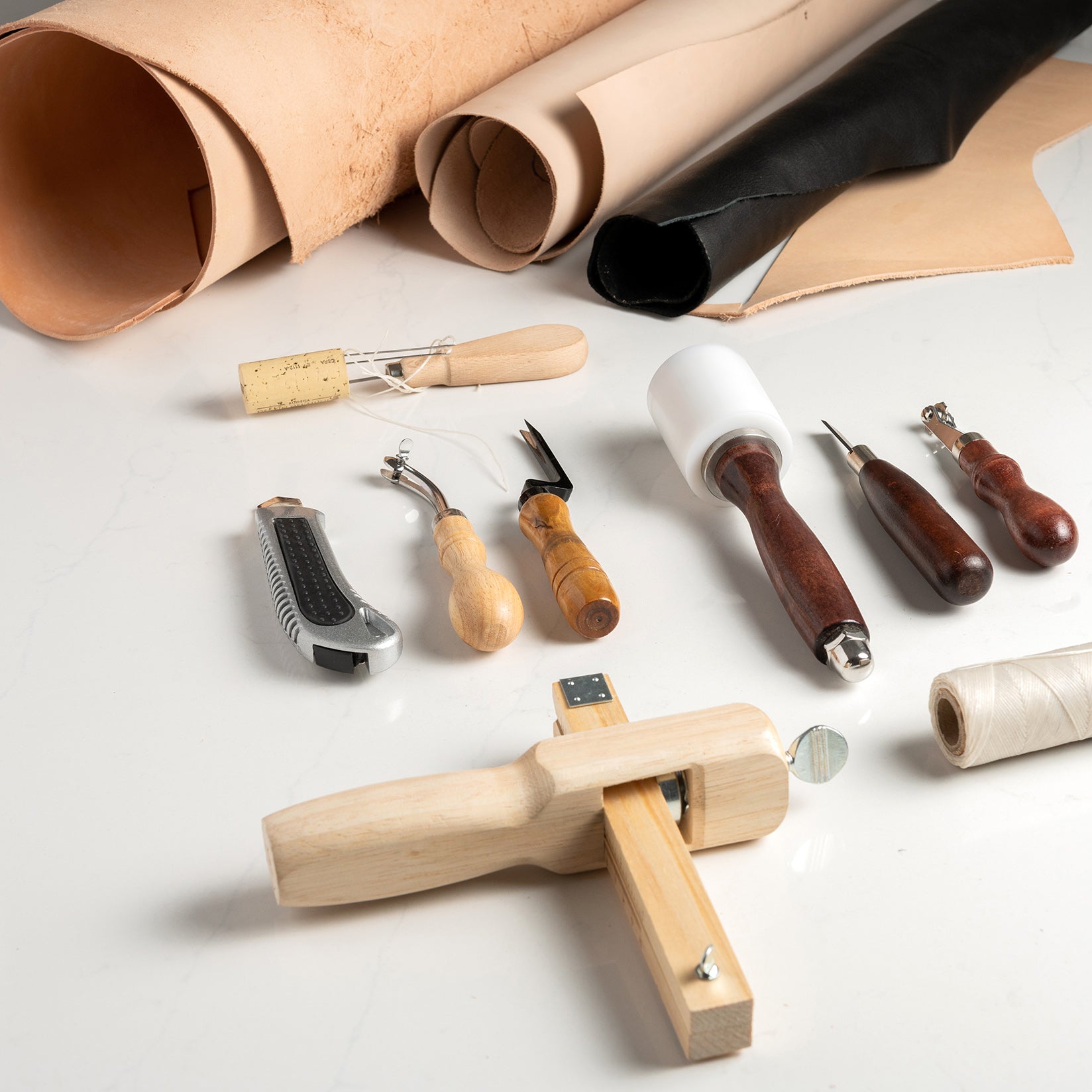

What does it mean for leather to be vegetable-tanned?
It means that it has been treated (or tanned) with natural tannins, using ancestral methods that are not harmful to the environment, as they are free of chemicals, such as chromium. This way, it can last a lifetime, is biodegradable, and when it is no longer used, it can be repurposed and reused in other forms to continue its life. This type of tanning is more expensive because it requires greater skill in treating the leathers.
Furthermore, this absence of chromium gives it a unique, irregular, natural appearance. This is where the second concept comes into play, Wabi-sabi, or the beauty of imperfection. Vegetable-tanned leather reveals itself as it is, in its pure state, with its past, with its imperfections. This is where its beauty, and above all its originality, lies; each skin will be different. And it will evolve over time.
Over the years, with sun, oils, and water, the original color will evolve into a beautiful and characteristic faint caramel-colored patina. For this reason, subtle differences in shade may arise in the same model from one batch of leather to another.
Our leathers evolve, like our faces, they are "the map of life" that reflects experiences and events, building a unique beauty in each model; no two will be exactly alike.
As Wabi-sabi states, we must learn to admire the beauty of imperfection and impermanence.


